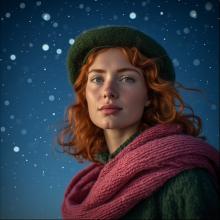
The 24 solutions to our puzzle were all solvable by visiting the Great Hall of the Scottish National Portrait Gallery.
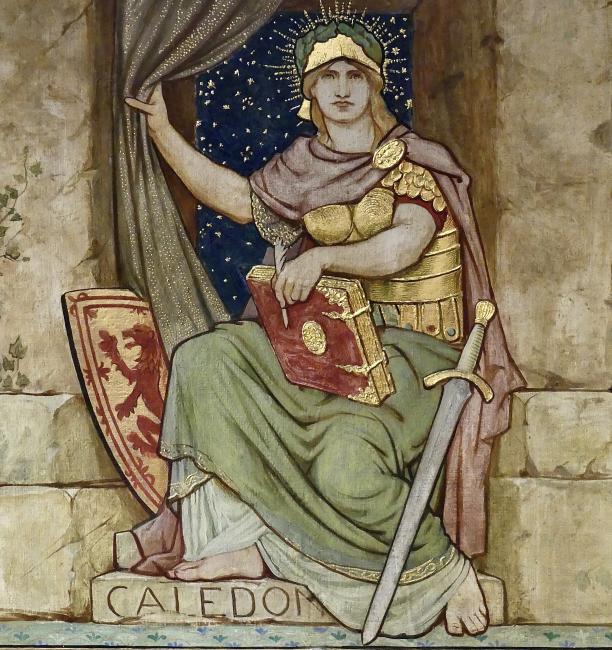
The image accompanying the clues (right) was our modern take on the figure of Caledonia (below), painted (like everyone else here) in c.1897 by the artist William Brassey Hole for his processional frieze.
Hence our subhead ‘Whole greater than parts’.
In each case, we referred puzzlers to a municipal coat of arms, above which the relevant individual (and 1 other) appears more or less centrally.
The answers are as follows:
1) A fish, tree, bird and bell for local doctor with a pleasant smell.
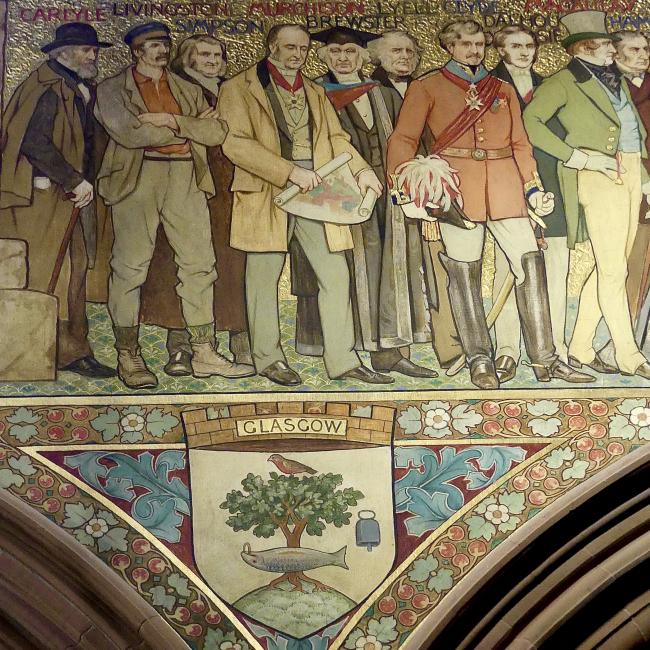
Glasgow, Simpson. James Young Simpson (1811–70) was the obstetrician who pioneered use of (pleasant smelling) chloroform as an anaesthetic for women during childbirth. The SNPG is at 1 Queen Street. Simpson lived locally at No. 56.
2) A tree-bound hound beside the water, still standing tall, perhaps was not as good as he oughta.
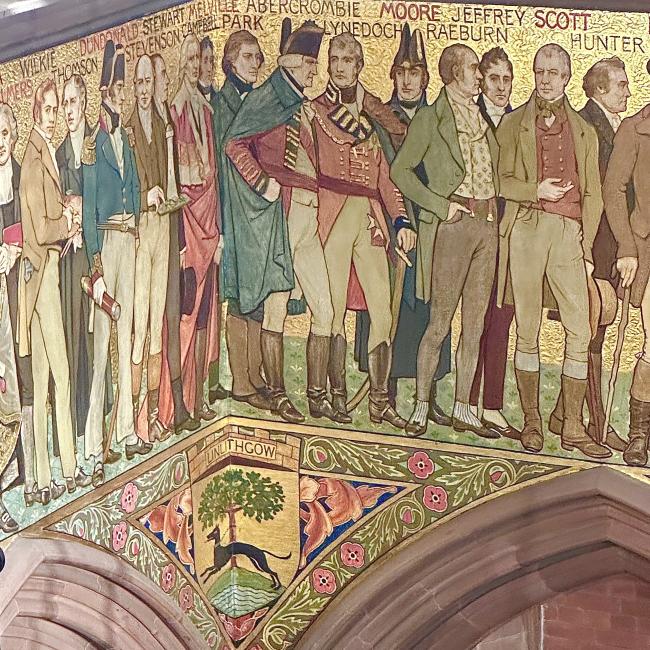
Linlithgow, Melville. Henry Dundas, 1st Viscount Melville (1742–1811) is remembered by some today as a repressive and corrupt politician who arguably prolonged the existence of slavery within the British Empire. He stands tall in St Andrew Square.
3) Chevalier, writer and moral fudge, home to a lawyer before a judge.
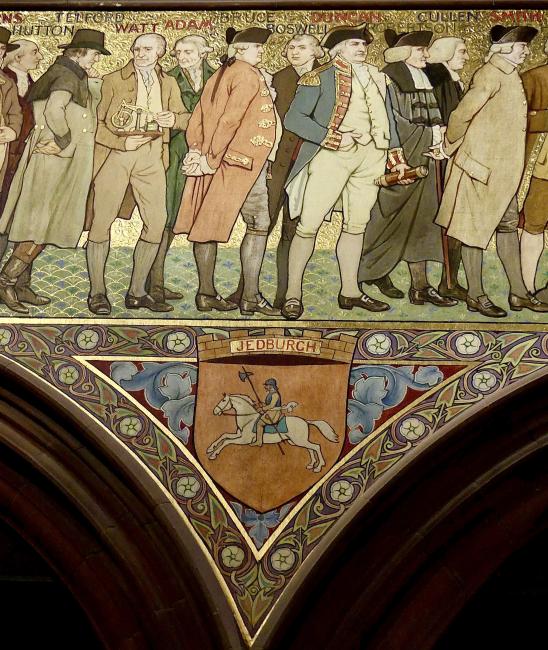
Jedburgh, Boswell. James Boswell (1740–95), a practising advocate and biographer of Dr Johnson was frequently torn between shame about his sexual misconduct and enjoyment of it. He lived for a time in the property later occupied by the Jolly Judge pub in the Old Town.
4) With oak and boar, his view of azure main some now deplore.
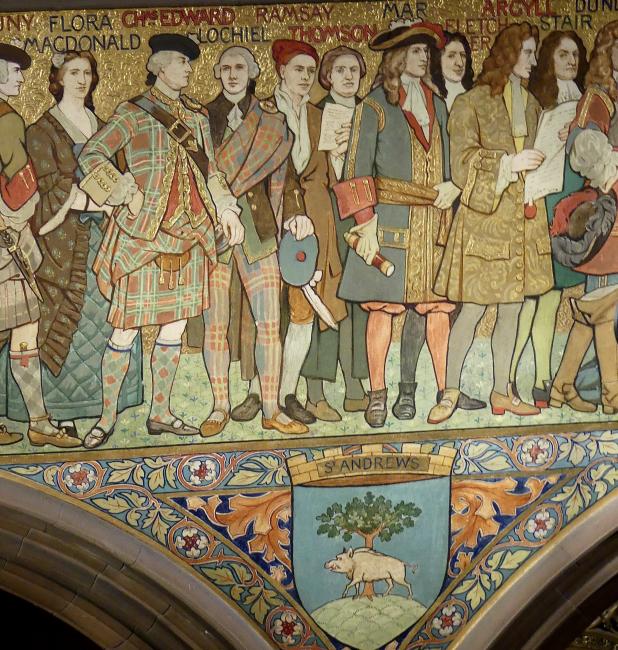
St Andrews, Thomson. James Thomson (1700–48), a poet, wrote the words to the imperialist anthem ‘Rule Britannia’. It begins:
When Britain first, at Heaven's command
Arose from out the azure main;
This was the charter of the land,
And guardian angels sung this strain:
"Rule, Britannia! rule the waves:
"Britons never will be slaves."
5) Strong fortress, gate and chapel, on buses for Newbattle.
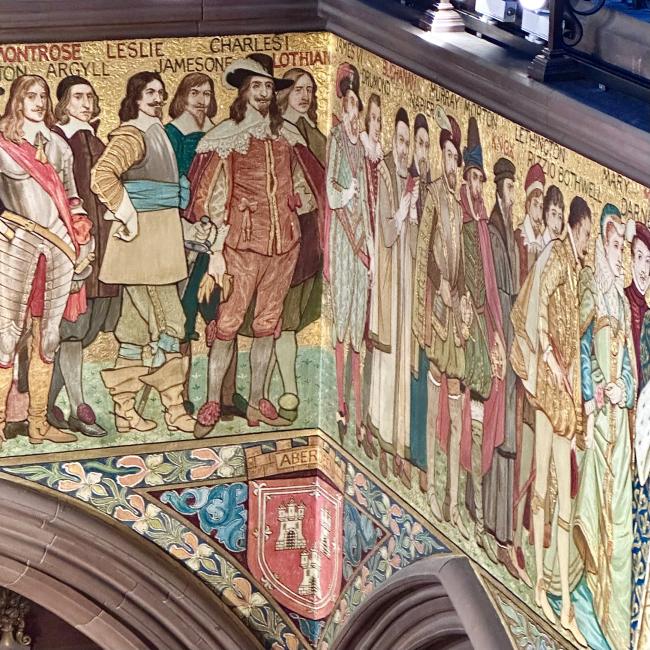
Aberdeen, Lothian. On Aberdeen's three hills were located Aberdeen Castle, a city gate and St Catherine's Chapel. Robert Kerr (1636–1703), a soldier, lawyer and politician, was at various times styled 1st Marquess of Lothian, the Earl of Lothian, the Earl of Ancram, Lord Kerr and Lord Newbattle.
6) A castle, maman, veuve with nerve.
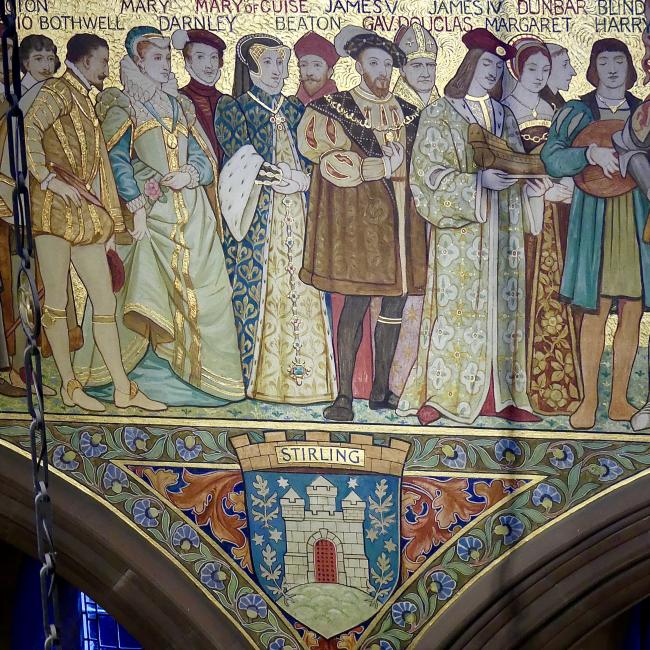
Stirling, Mary of Guise. Mary of Guise (1515–60) was King James V’s second wife. Originally a French noblewoman, she was the mother of Mary Queen of Scots. As a widow and regent, she showed considerable courage navigating political and religious turmoil.
7) The flag and lamb and German-Netherlandish glam.
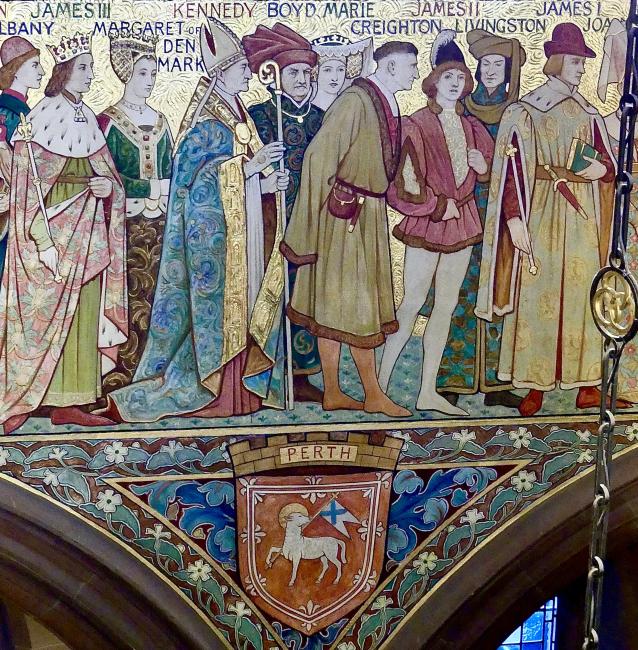
Perth, Marie. Marie de Gueldres (1433–60) was born in a duchy which spans today's Germany and Holland. She spent much of her youth in France. Married to King James VI, for 3 years after his death she ruled Scotland as regent.
8) A cross and diseased old man so full of blood.
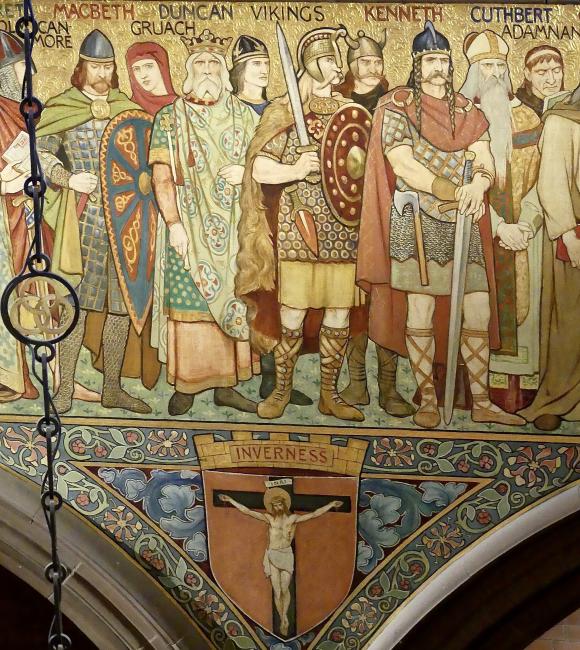
Inverness, Duncan. King Duncan (1001–40) ruled Scotland from 1034 to 1040. He was nicknamed An t-Ilgarach: sick. In Shakespeare’s play, Macbeth remembers murdering him: ‘Yet who would have thought the old man to have so much blood in him?’
9) Two lions hold the tower for one who had no real power.
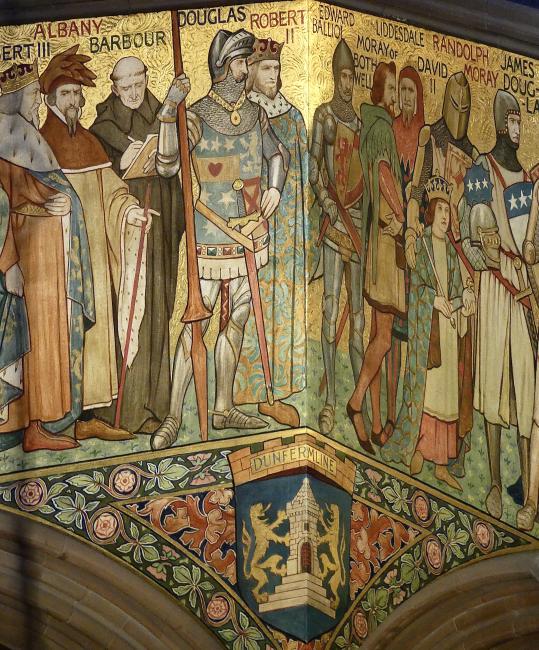
Dunfermline, Balliol. Edward Balliol (1283–1364) partially and intermittently ruled Scotland for 24 years. He depended upon English support and was King Edward III’s puppet.
10) A pot of lilies for this lass, who sickened, faded, died, alas.
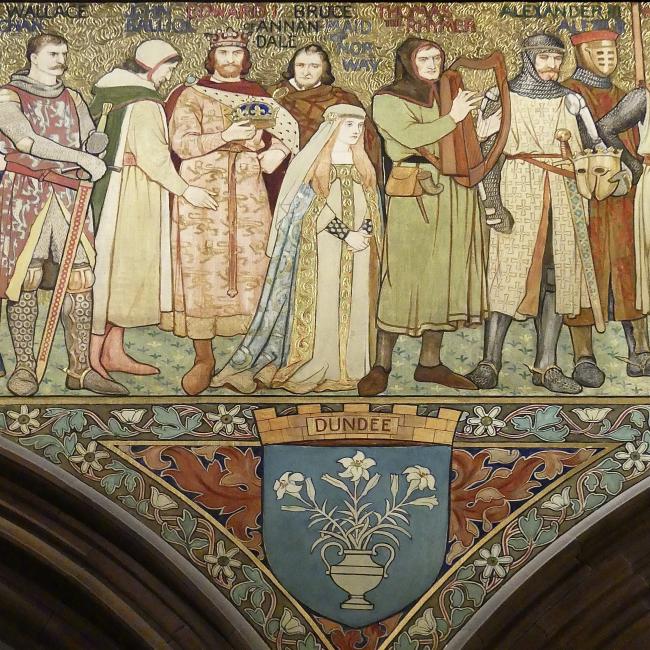
Dundee, Maid of Norway. Queen Margaret (1283–90) was a Norwegian princess who, through her mother’s line, succeeded to the Scottish throne in 1286. She voyaged to the mainland aged 7 but died in South Ronaldsay as a result of sea sickness.
11) A ship in motion, victor on land and ocean.
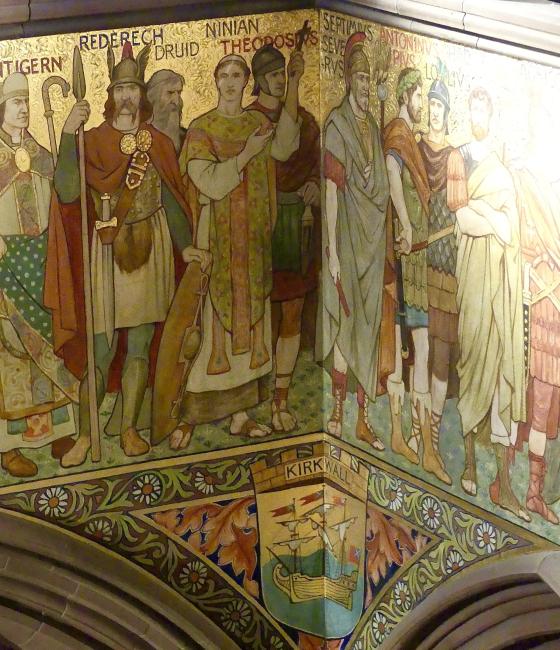
Kirkwall, Theodosius. Theodosius was a Roman general. Following an incursion by Picts and Scots into Roman ‘England’ in 367, he successfully used ships to subdue them in ‘Scotland’ the following year. Or so he claimed.
12) Three towers and flags: hard times, more flags.
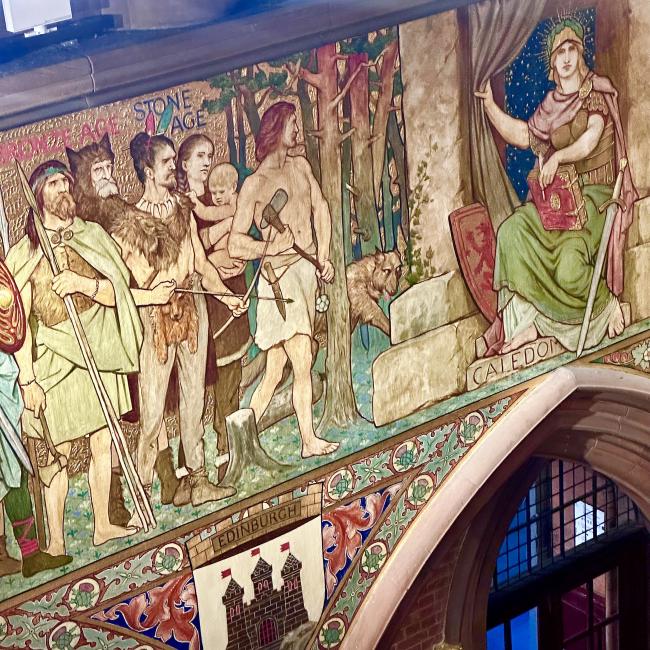
Edinburgh, Stone Age. Flagstones. Rock-bottom puns.
Topics
Location