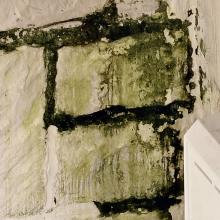
On 6 November, local resident Mike Worobec wrote to the Spurtle decrying the use of bright white paint in New Town basements (Letters, 'Basement Whitewash is not the Solution').
Mr Worobec has now written a second, longer letter on the same subject to elected representatives and Council officials. We reproduce it below, with permission, unedited and in full.
In summary, Worobec repeats his concerns about the effect of inappropriate paint on Georgian masonry and its impact on the appearance of listed buildings and protected streetscapes. He cites East Claremont Street as a 'particularly conspicuous example'. He questions why the practice has been allowed to spread, contrary to Council guidelines and statutory regulations. Worobec then calls for rigorous and proportionate Enforcement, remedial works and financial penalties.
'Edinburgh’s architectural heritage,' Worobec concludes, 'is too important to be left vulnerable to a gradual erosion of its character through inappropriate and potentially unauthorised alterations.
'We have a responsibility to preserve what makes this city exceptional. I would like to see the Council demonstrate that it takes that responsibility as seriously as it expects property owners to take theirs.'
Spurtle has approached the Cockburn Association, Edinburgh World Heritage, Historic Environment Scotland and Cllr Joan Griffith (Planning Convener) for comment.
*****
Dear Councillors, MSP, MP and Senior Planning and Conservation Officers,
FORMAL COMPLAINT AND REQUEST FOR INVESTIGATION
Re: The inappropriate painting and whitewashing of original Georgian sandstone, basement walls and stone capping within Edinburgh’s New Town Conservation Area – urgent action required to protect our architectural heritage.
I am writing to express my considerable concern about what appears to be an increasingly widespread and disturbing practice of painting original stonework on Georgian properties throughout Edinburgh’s New Town.
In particular, I am concerned about the application of brilliant white paint to traditional basement stone walls, boundary masonry and, increasingly, the upper stone capping beneath the original iron railings.
East Claremont Street is a particularly conspicuous example of this practice. The transformation of what should be naturally weathered, traditional sandstone into stark, brilliant white surfaces is visually intrusive and entirely inconsistent with the architectural character and historic integrity of the surrounding Georgian streetscape.
I find it extraordinary that this practice appears to be becoming normalised in an area recognised internationally for its architectural significance and protected by some of the most important heritage designations in Scotland.
This is not simply a question of personal taste or differing opinions about decorative finishes. It is a matter of conservation policy, statutory protection, responsible property maintenance and the Council’s duty to safeguard an internationally important historic environment.
1. The destruction of natural stone character and patina
Edinburgh’s Georgian New Town is celebrated for its architectural coherence, its classical proportions and, importantly, the natural materials from which it was constructed.
Much of the city’s distinctive architectural identity comes from locally quarried sandstone, including the famous Craigleith stone, which was extensively used in Edinburgh’s historic buildings.
The natural colour, texture, weathering and patina of this stone are intrinsic to the character of the buildings. They are not imperfections that need correcting or surfaces that require cosmetic improvement.
To cover these materials in brilliant white paint is to obscure their natural qualities and fundamentally change their appearance.
The contrast between the original sandstone, traditional iron railings, entrance steps and surrounding masonry is an essential part of the Georgian streetscape.
There is a considerable difference between sympathetic maintenance and inappropriate modernisation. Painting original stonework in an attempt to create more light or a cleaner appearance is not conservation.
Indeed, it can be damaging both aesthetically and physically. Modern paint finishes can trap moisture within traditional masonry, potentially contributing to damp and deterioration.
The cumulative effect is particularly concerning. If one property owner undertakes this work and others follow, the distinctive character of entire streets can gradually be eroded.
2. What does the Council’s own conservation guidance actually say?
I have examined the City of Edinburgh Council’s September 2025 Listed Buildings and Conservation Areas guidance, and I believe its provisions are particularly relevant.
The Council states:
“External stonework must not be painted or rendered, unless this was the original condition.”
It goes further, explicitly encouraging the safe removal of paint and later finishes from stone facades, explaining that these can trap moisture and cause damp problems.
The guidance also states that:
- Listed Building Consent is required to apply or remove paint from stonework on listed buildings.
- Planning permission is also required for painting in a conservation area.
- Basement steps, floors and walls should not be painted.
- External alterations to listed buildings, however minimal, may require Listed Building Consent.
This is remarkably clear guidance.
It raises an obvious question: if the Council has established these principles, why are we witnessing the increasingly conspicuous painting of original Georgian stonework throughout the New Town?
I would particularly like clarification regarding the painting of the upper capping stones beneath railings. These are not simply decorative surfaces. Where original, they form part of the historic masonry and boundary detailing and should be afforded appropriate protection.
3. Is this practice actually permitted in the New Town?
I would like the Planning Department to provide a definitive answer.
Is it permissible for property owners to paint original Georgian sandstone basement walls, boundary masonry and stone capping in brilliant white within the New Town Conservation Area?
If so, under what specific planning regulations, policies or permissions?
I would ask the Council to distinguish clearly between:
- Individually listed properties, where alterations affecting their character may require Listed Building Consent.
- Unlisted properties within the New Town Conservation Area, where planning permission may be required for external painting.
- Original dressed sandstone and masonry, as opposed to surfaces that were historically rendered, harled or painted.
The Council should also clarify whether the fact that a property is unlisted provides any exemption from the relevant conservation area controls.
I would specifically ask whether the examples on East Claremont Street have been checked against the Council’s planning records and whether the necessary permissions have been granted.
If permissions have been granted, I would like to understand the conservation grounds upon which such decisions were made.
If permissions have not been granted, why has this work not been investigated?
4. Relevant legislation and statutory protection
I would ask the Council to consider this complaint in the context of the following legislation and planning policies.
A. Planning (Listed Buildings and Conservation Areas) (Scotland) Act 1997
Sections 6, 7 and 8 establish the statutory controls governing alterations to listed buildings.
Section 6 restricts unauthorised alterations affecting the character of a listed building, while Section 7 establishes the requirement for Listed Building Consent.
Section 8 makes carrying out unauthorised works an offence.
Importantly, the legislation provides for prosecution, with penalties on summary conviction of up to £50,000 and/or imprisonment for up to six months. On conviction on indictment, the maximum imprisonment is two years, with an unlimited fine.
Section 34 provides for Listed Building Enforcement Notices, which can require unauthorised works to cease and steps to be taken to remedy the breach, including restoring the building to its former state.
Sections 38 and 39 provide further powers and penalties where an enforcement notice is not complied with.
B. Town and Country Planning (Scotland) Act 1997
This legislation provides the wider framework for planning permission, development control and enforcement.
The Council has powers to investigate suspected breaches of planning control and, where justified, issue enforcement notices requiring remedial action.
Failure to comply with an enforcement notice can result in prosecution and financial penalties.
C. Edinburgh City Council’s Listed Buildings and Conservation Areas Guidance – September 2025
This is particularly important because it sets out the Council’s own expectations for alterations and maintenance of listed buildings and properties within conservation areas.
Its explicit position that external stonework must not be painted unless this was its original condition should be central to the investigation of the examples raised in this correspondence.
D. National Planning Framework 4 and Historic Environment Policy for Scotland
The Council’s own guidance identifies these as important policy foundations for protecting the character, significance and setting of historic buildings and conservation areas.
The protection of Edinburgh’s New Town should be considered in this wider national and international heritage context.
5. Rigorous enforcement – guidance must mean something
I am particularly concerned that conservation policies, however well written, are of little practical value if they are not consistently implemented.
There is little point in publishing guidance that clearly discourages the painting of natural stonework if property owners can disregard it without investigation or consequence.
I therefore request that the Council:
- Undertake an immediate inspection of the affected properties on East Claremont Street, including the basement walls and painted stone capping beneath the railings.
- Establish whether the relevant properties are individually listed, form part of a listed building or are otherwise protected by their conservation area designation.
- Check the planning history of each affected property and establish whether the appropriate planning permission and/or Listed Building Consent was obtained.
- Investigate any suspected unauthorised alterations and provide a clear written explanation of the findings.
- Where unauthorised works have taken place, consider the appropriate formal enforcement action, including the requirement to remove inappropriate paint and reinstate the original appearance of the stonework, using specialist conservation advice.
- Undertake a wider review of similar alterations throughout the New Town rather than treating each occurrence as an isolated matter.
- Introduce a more proactive approach to monitoring and enforcing inappropriate external alterations to historic masonry.
- Ensure that property owners, contractors and managing agents are made aware of the Council’s requirements before undertaking such work.
6. Enforcement notices, remedial works and financial penalties
I appreciate that enforcement action must be proportionate and consistent with the law. However, where unauthorised work has affected a listed building, or where a formal enforcement notice has been issued and subsequently ignored, the Council has significant statutory powers.
I would expect the Council to consider these powers fully rather than relying solely on informal correspondence or voluntary compliance.
These include:
- Listed Building Enforcement Notices requiring the restoration of a building to its former state or other appropriate remedial work.
- The Council undertaking necessary remedial work itself and recovering the costs from the relevant owner or lessee, where the statutory conditions are met.
- Prosecution for unauthorised works to listed buildings under Section 8 of the 1997 Act.
- Financial penalties for failure to comply with Listed Building Enforcement Notices, including fines of up to £20,000 on summary conviction and unlimited fines on conviction on indictment.
- The use of the relevant enforcement and prosecution powers under planning legislation where planning controls have been breached.
I would also ask the Council to explain how it determines whether prosecution or other formal enforcement action is in the public interest, particularly where repeated or conspicuous alterations undermine the character of a conservation area.
Financial penalties should not be regarded as an automatic response to every instance of painting. However, where an offence has occurred or a formal notice has been ignored, the available sanctions should be applied where justified.
There must be a meaningful distinction between responsible property maintenance and unauthorised alteration of protected historic buildings.
7. The wider responsibility to protect Edinburgh’s international heritage
The New Town is not simply a collection of privately owned properties. It is an internationally recognised historic environment and a defining part of Edinburgh’s identity.
Its architectural significance depends upon the integrity of its buildings, the materials used in their construction, the relationship between individual properties and the coherence of the wider streetscape.
The natural sandstone, traditional railings, steps, basement walls and architectural detailing all contribute to this character.
We should not allow this historic environment to be gradually transformed through modern cosmetic preferences, particularly when those preferences appear to conflict with the Council’s own conservation guidance.
I fully appreciate that homeowners should be able to maintain and enjoy their properties. However, ownership also brings responsibilities, particularly when a property is situated within an internationally significant conservation area or is individually listed.
The desire for more light within a basement, for example, cannot automatically justify painting over original historic masonry.
There are sensitive and appropriate ways to maintain and improve traditional buildings. Covering original Craigleith sandstone in brilliant white paint should not be regarded as one of them.
Once the original character and surface of historic masonry have been compromised, restoration can be difficult, expensive and potentially damaging if undertaken incorrectly.
We should be protecting this heritage for future generations, not allowing it to be progressively diminished.
8. Specific responses and actions requested
I would appreciate a formal written response addressing the following questions:
- Does the Council consider the painting of original sandstone basement walls and stone capping in brilliant white to be acceptable within the New Town Conservation Area?
- What specific permissions are required for these works on listed and unlisted properties respectively?
- Have the examples on East Claremont Street been investigated, and were the necessary permissions obtained?
- What enforcement action will be considered if the works are found to be unauthorised?
- Will the Council undertake a wider inspection of the New Town to identify similar instances?
- Will the Council commit to a more proactive and consistent enforcement policy to prevent further inappropriate painting of original historic stonework?
- Where unauthorised painting has taken place, will the Council consider requiring reinstatement using appropriate specialist conservation methods?
- Can the Council confirm which department and senior officer will be responsible for investigating and responding to this complaint?
I would also appreciate confirmation that this correspondence has been formally registered as a planning and conservation enforcement complaint, with an identifiable reference number.
I am copying this correspondence to our elected representatives because I believe the matter deserves wider attention and political scrutiny. The protection of Edinburgh’s architectural heritage should not depend upon individual residents repeatedly drawing attention to alterations that appear to contradict the Council’s own published guidance.
Conclusion
I want to see Edinburgh’s New Town protected, respected and properly maintained.
The natural stonework of our Georgian buildings is part of the city’s cultural inheritance. Its weathering, colour and patina are qualities to be appreciated and preserved, not covered up in the pursuit of an artificial brightness.
East Claremont Street is a particularly concerning example, but my concern extends to the wider New Town and the precedent that is being established.
The Council has published conservation guidance, and the Scottish Parliament has provided statutory protections. What is now required is the consistent and rigorous implementation of those principles.
Conservation without enforcement risks becoming little more than an aspiration.
I therefore ask that this complaint is treated seriously, investigated by appropriately qualified planning and conservation officers, and answered with specific reference to the relevant legislation, policies and enforcement powers.
Edinburgh’s architectural heritage is too important to be left vulnerable to a gradual erosion of its character through inappropriate and potentially unauthorised alterations.
We have a responsibility to preserve what makes this city exceptional. I would like to see the Council demonstrate that it takes that responsibility as seriously as it expects property owners to take theirs.
I look forward to receiving a substantive response.
Kind regards,
Michael Worobec
Claremont Crescent
*****
Got a view? Tell us at spurtle@hotmail.co.uk
*****