
Reflections on the evening
Charlie Ellis
Summarising two hours of debate is unnecessary given the YouTube release [available here], so I’d like to offer a few personal reflections on what struck me most.
Above all, the event was remarkably well-attended (over 120 attendees) and organised, proving that there is still a significant appetite for political discussion with a distinctly local character.
Candidates
The six candidates who answered questions in Broughton St Mary's were: Ben Macpherson (Scottish National Party); Jo Mowat (Scottish Conservative & Unionist Party); Gary Neill (Reform UK); Kate Nevens (Scottish Green Party); Liss Owen (Scottish Liberal Democrats); and Oliver Thomas (Scottish Labour Party).
Jo Mowat and Gary Neill are candidates in the Edinburgh Central constituency but appeared on this occasion as proxies for Haris Young and David Lees, both of whom were unavailable. Mowat and Neill are also list candidates for the Edinburgh East & Lothian region.
The event was chaired by Charlotte Encombe, Chair of Leith Central Community Council.
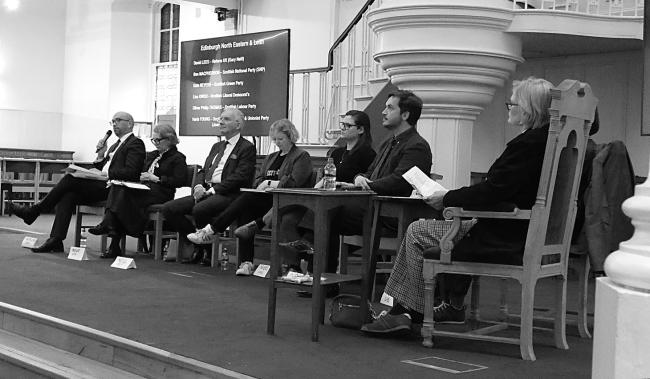
City of incomers
One notable feature was the way the panel (including substitutes) was representative of Edinburgh's character – several members were not born and bred locally but have been drawn to the city through study or work. It was a reminder of the many pull factors that make Edinburgh what it is.
The evening was full of expressions of appreciation for the city's qualities (the general standard of its built environment, the excellence of its universities, and even, perhaps surprisingly, its bus service) alongside the tensions some of these are producing.
Success and its pressures
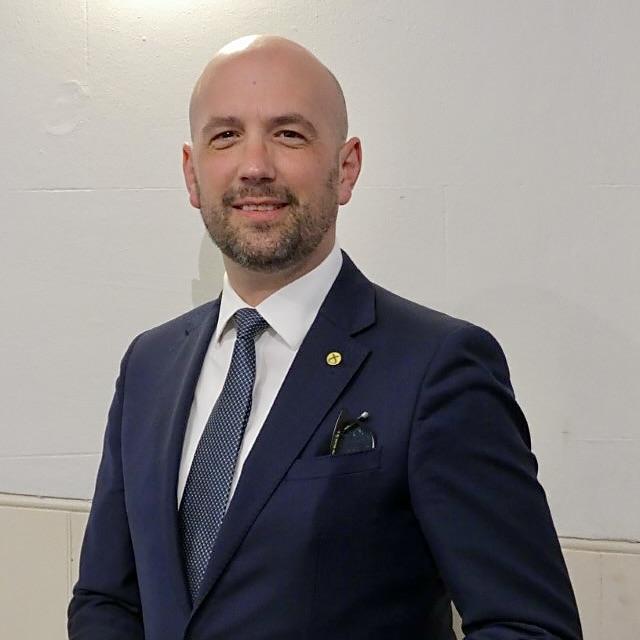
In his opening remarks, which overran the bell, Ben Macpherson [right], Minister for Further Education, Higher Education & Science, observed that many of the problems Edinburgh faces are a product of its own success. The fact that this constituency has in effect been broken in two, forcing Macpherson to choose which segment to stand in, is itself an illustration of the changes occurring and the way the population is increasing. With various substantial developments ongoing, such as in the Baltic Street and Salamander Street area and Powderhall, this trend is only going to continue.
Issues such as over-tourism in certain parts of the city and the proliferation of new student accommodation blocks are, in this reading, evidence of the demand to visit and study here. How the city might relieve some of these pressures without undermining its undoubted strengths was a theme running through much of the discussion. One refreshing aspect of the debate was that the panellists rarely fell into the habit of suggesting that solving these problems was straightforward.
Regeneration and gentrification
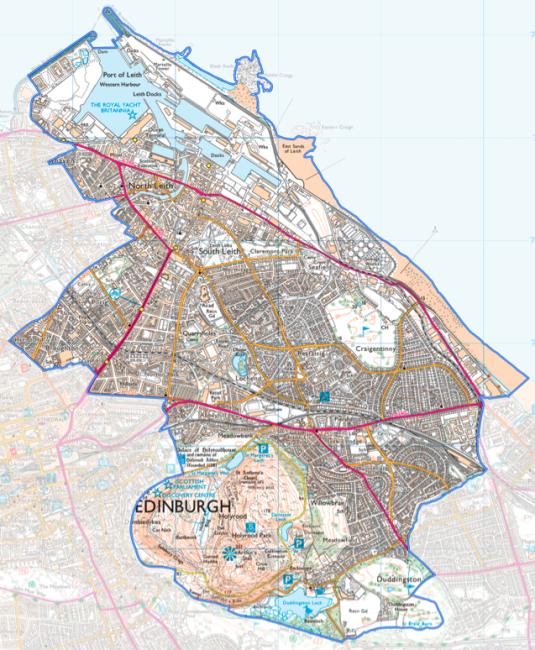
Leith in particular has become one of the most attractive urban places in the UK, transforming the character of the area. For many it is a story of urban regeneration, while others are concerned about the effects of gentrification. These tensions were an important part of the discussion. There was broad consensus that the city is facing a number of crises, particularly around housing. However, that consensus broke down when it came to the precise nature of those problems and how they might be addressed.
A recurrent theme of the evening was that Edinburgh's success is not being shared equally. A city that is, by British standards, relatively affluent nevertheless contains many people who struggle to make ends meet, to access decent housing, and to find good employment. Ben Macpherson remarked on the concerning rise in food bank use. These tensions are in many ways reflective of the very varied character of the new Edinburgh North Eastern & Leith constituency, which includes pockets of both wealth and deprivation.
Tourism, the tourist levy and apart-hotels
Much of the evening circled around the question of how more people might benefit from Edinburgh's dynamism and prosperity. How can its success as a tourist destination feed into a general uplift in living standards? The introduction of the new Edinburgh Visitor Levy was cited as one way this is being addressed, with some of the revenue going into projects to improve the public realm – things which everyone could use and share.
The rise of apart-hotels, seen as something of a planning loophole, prompted engaged discussion. For Kate Nevens, it was an example of an area needing 'radical local democracy' and genuinely embedded participation. She saw such developments as something to be wary of, and also regarded the proliferation of student accommodation blocks as often 'exploitative' of students themselves as well as creating tensions in local communities.
It is worth noting that concern about the rise of student accommodation blocks cuts across the political spectrum. While it has become a trope associated with elements of the hard right, Nevens' contribution illustrated that there are critiques of such trends from the left too, as part of a wider critique of neoliberalism. Liss Owen saw the issue as part of a broader 'housing emergency', arguing that access to 'stable homes' was fundamental to a coherent society.
Oliver Thomas argued that some of the grievances expressed in relation to this issue had a basis in truth – the general sense that students, festival-goers and tourists are often prioritised over the interests of local residents, and that the condition of Edinburgh's roads was evidence of this. He stopped short of fully accepting this critique but acknowledged it was something that needed to be addressed.
In another show of cross-party agreement, Ben Macpherson said he agreed with much of what Thomas had said. For Macpherson, the question was not one of opposing new developments but of ensuring that they all contained substantial social and affordable housing, pointing to the Granton Waterfront development as one that incorporated these provisions. Jo Mowat, by contrast, felt that there was too much political interference in such matters, arguing that more regulation is not the answer and that the housing market would work better for everyone with less intervention.
Gary Neill [above-right] appeared to make a slight slip of the tongue when he described Edinburgh as a major 'tourist trap' (a phrase with negative connotations) when he presumably meant tourist destination. Given the way many Reform figures and supporters lean into grievance politics, it was interesting that he warned against hostility to tourism. 'Don't kill the goose that lays the golden eggs' was his essential perspective. He also argued that Edinburgh should embrace its status as a 'magnet for students', suggesting that the city should celebrate them as sources of jobs and wealth.
Housing – diverging solutions
How could a decent proportion of the new housing going up in major developments such as Granton Waterfront be made accessible to those on lower incomes? How could Lothian Bus services be improved for those with limited mobility? While the existence of a housing crisis commanded general agreement, the proposed solutions diverged sharply along predictable lines – from greater public intervention and affordable housing requirements to reduced regulation and greater reliance on market mechanisms.
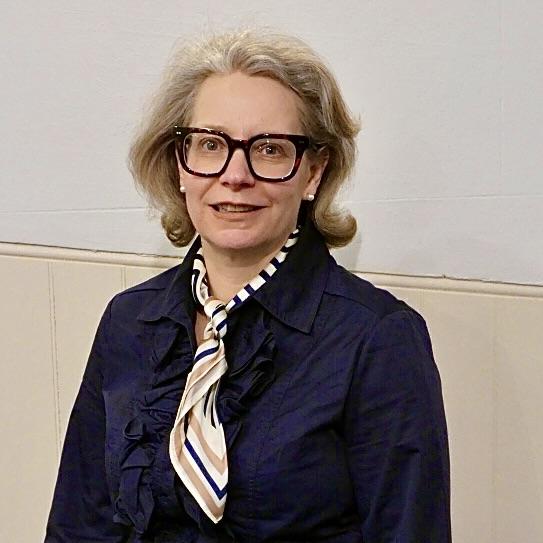
The Reform–Conservative dynamic
One thing worth watching at local political events of this kind is how they connect to wider narratives. In UK politics, the relationship between Reform UK and the Conservatives is a significant and contested one, as evidenced by the steady flow of defections from the latter to the former.
It was therefore interesting to observe how Gary Neill interacted with Jo Mowat [right]. On several occasions, Neill expressed straightforward agreement with Mowat, and the two shared a broad perspective that Scotland is being held back by a sclerotic and over-dominant state, and that liberating market forces is what the Scottish economy and society require.
Neill was confident and sure-footed on this territory, drawing on his own experience in business across a number of different countries. Though he opened by making clear he was new to politics, he started confidently, standing up to give his points greater force and energy. He was keen to push the idea that Reform represents a genuinely new approach and that people are looking for something else after decades of failure under the ‘established’ parties.

Cultural flashpoints – assisted dying, trans rights and Gaza
Neill came somewhat unstuck when the discussion moved to more cultural and moral questions, specifically assisted dying. He lost a significant portion of the audience when he drew a parallel between abortion and assisted dying, arguing that in both cases the person most affected was not given a proper choice, and went on to contrast this apparent lack of concern for the value of life with the protection of criminals who have carried out heinous crimes.
For Kate Nevens [right], this was 'a wild answer,' playing into the narrative that Reform and the broader hard right are articulating increasingly extreme positions on cultural matters. However, Reform's rise in the polls suggests that such views are perhaps more widely held than Nevens would like to think.
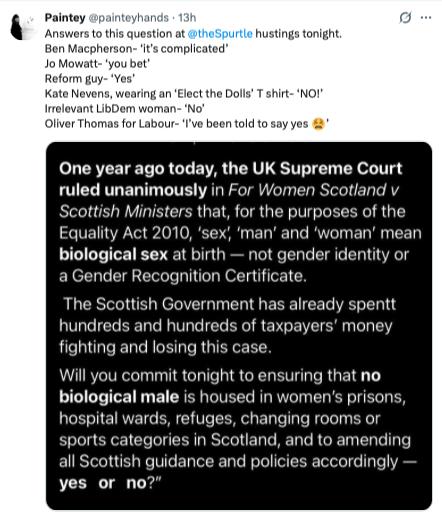
Almost inevitably, the question of trans rights provoked the most intense exchanges, with Kate Nevens finding that the loudest sections of the audience were firmly opposed on this topic. Equally inevitably, Nevens use of the word 'genocide' in relation to Gaza drew an angry response, with one audience member insisting that 'there is no genocide' and that those who believed otherwise had swallowed 'Islamist propaganda'.
Such deep-seated issues are not going to be resolved at an event of this kind, but it was valuable that they were aired. While Nevens’s language and use of acronyms were familiar to those in left-wing circles, they occasionally risked alienating people not already sympathetic to her perspective. In truth, much of her contribution resonated with the audience, which raises a broader question: How representative are those who attend such events of the wider electorate?
Nevens argued that the Greens represented 'a different kind of politics'. I agree that there does appear to be a genuine appetite for something new – though it is far from clear which direction that appetite will ultimately drive things. What the evening clearly illustrated was the distance between the two ends of the panel. Whereas Neill and Nevens agree that the status quo is not working, they disagree profoundly about almost everything else. Both Reform and the Greens may well perform strongly in the upcoming Scottish Parliament elections, but they are pointing in very different directions.
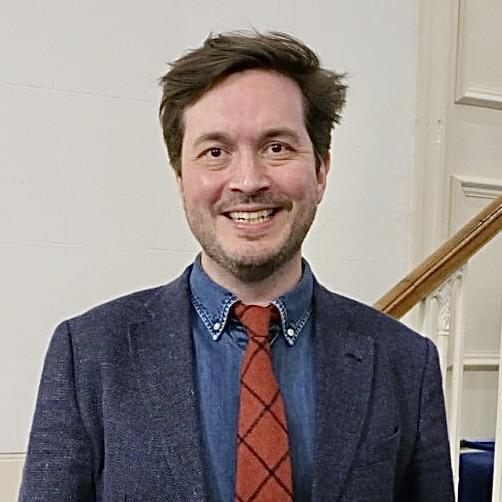
Public transport
As is often the case at events of this kind, public transport generated a good deal of debate and audience engagement. While there was general praise for Lothian Buses, some frustration was expressed about particular routes.
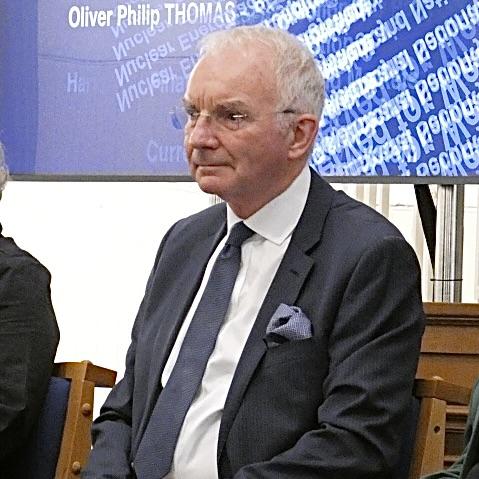
Oliver Thomas [right] made the case for far more services that circle the city centre rather than pass through it, such as the 38 or the 36. Jo Mowat expressed the hope that subsidised services such as the No. 13 would be retained. Ben Macpherson mentioned that his father had campaigned against the infamous proposed inner-city ring road and felt that Edinburgh had never needed it precisely because of the quality of its bus network.
On active travel, Macpherson indicated that he believed the proposed walking and cycling path from Powderhall to Abbeyhill was increasingly likely to receive the go-ahead, which would be a welcome addition to the North Edinburgh path network. There was also a degree of scepticism from the panel about whether the Roseburn Path should be used to route a new tramline – and the vigour of that particular debate is itself evidence of how strongly people feel about public transport in this city.

Quality of debate and highlights
As for the quality of the debate itself – it was genuinely refreshing that the panellists did not interrupt one another. The occasional quiet murmur of disagreement was as far as it went, allowing each speaker to make their points. On the other hand, some answers ran on longer than necessary. Panellists would often have made a stronger impression by being more succinct rather than feeling obliged to fill their two-minute slots.
There was excessive 'gabble' at times as candidates tried to cover too much ground, and a few too many answers that were somewhat platitudinous. The nature of the contributions varied considerably, ranging from highly polished and fluent answers to others driven more by passion and earnestness.
The highlights, for me, were those moments when panellists drew on their own professional experience to add genuine depth to the discussion. Oliver Thomas provided excellent insights from his years working as a doctor, stating that, though it is a job he loves, it is 'getting harder and harder' to do. Having also suffered a near-fatal heart attack the previous year, he was able to give vivid testimony of experiencing both sides of healthcare. His contribution to the assisted dying debate was particularly impressive.
Liss Owen [above-right] brought her experience as a teacher and support worker to bear on several questions. Ben Macpherson drew on his time as a government minister, offering insight into how political change can be enacted from within. Jo Mowat contributed her inside knowledge of local government, Gary Neill a business perspective, and Kate Nevens her experience of the voluntary and charity sector. All of the panellists could, if elected, bring something substantial to the Scottish Parliament.
Brain drain?
This connects to a broader debate about the calibre of those entering public life. In a recent episode of the BBC Radio 4 podcast Radical with Amol Rajan ('Reclaiming the Centre: Is the Old Political Order Dead?'), Adrian Wooldridge argues that the move away from the centre has diminished the talent pool in modern politics. Whereas the mid-20th century attracted the 'absolute best and the brightest', individuals who might otherwise have led major corporations or academic institutions, today's able 'problem-solvers' are, in his view, repelled by the 'performative anger and ideological purity tests' of the political wings.
Last night's hustings offered some grounds for cautious optimism on this front. The range of real-world experience represented on the panel – medicine, teaching, business, government, local government, and the voluntary sector – suggested that, at least at constituency level, politics is still attracting people with something genuinely useful to contribute.
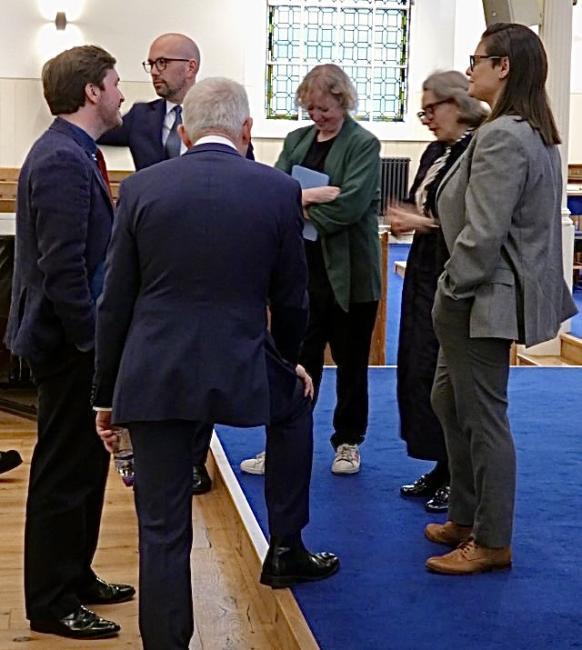
[Charlie Ellis is a researcher, EFL teacher and essayist who writes on culture, education and politics. His recent work has appeared in the Dublin Review of Books, Sceptical Scot, Bella Caledonia, Imagined Spaces, Scottish Affairs, Society, and the Broughton Spurtle. Hustings photography: Emmanuel Roussot.]
----------

READER'S LETTER (18 April 2026)
Dear Spurtle,
Charlie Ellis writes above: 'What the evening clearly illustrated was the distance between the two ends of the panel. Whereas Neill and Nevens agree that the states quo is not working, they disagree profoundly about almost everything else.'
I would add: The two parties have a fatal (for intelligent democratic politics) symbiotic relationship, using the 'opposite' party to sharpen their own populist profile.
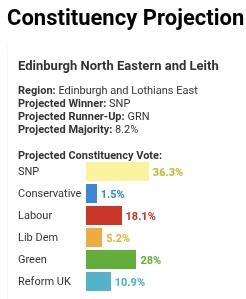
While some commentators make a lot of the rearranged constituency boundary, I feel that the only thing that has really changed is the move of disenchanted Labour voters to the 'radical' Greens in this student-heavy constituency (see chart right). Meanwhile, Reform cleans up across Scotland in both more conservative former Labour areas and, in general, from among Conservatives.
Will the centre hold?—Malgrowther